
The Truth About Statins: 7 Reasons to Question the Prescription
“As a pharmacist with 25+ years of experience, I’ve dispensed millions of statin prescriptions. I wish more patients knew this before their first pill.”
One in four Americans over 40 takes a statin. They’re the most prescribed class of medications in the country, and for many doctors, they’re the first and only response to elevated cholesterol numbers.
But should they be?
A 2026 Lancet meta-analysis of 23 randomized trials involving over 154,000 participants just found that 62 of 66 side effects listed on statin labels lack reliable evidence. That sounds like good news, until you look at the four side effects that are confirmed and the bigger questions the study doesn’t answer.
As a registered pharmacist in Dripping Springs, TX, I’ve spent 25 years watching statins get prescribed reflexively. I’ve seen patients who genuinely need them. I’ve seen patients who are on them for no good reason. And I’ve seen the questions that almost never get asked before that prescription is written.
Here are seven of them.
1. Most reported side effects may be overstated, but that’s not the whole story
The 2026 Lancet study found that symptoms like memory loss, cognitive impairment, depression, fatigue, sleep disturbance, headaches, and nausea occurred at the same rate in people taking statins as those taking placebo. In other words, statins probably aren’t causing those specific problems — people just experience them and attribute them to the medication.
That’s important information. It means millions of people may have stopped a beneficial medication based on symptoms that weren’t actually caused by the drug.
The study also confirmed that statins do cause muscle symptoms (particularly in the first year), liver enzyme changes, mild edema, and new-onset diabetes. These aren’t theoretical. They’re established.
Source: Lancet 2026 — CTT Collaboration Meta-Analysis
2. Statins raise your blood sugar and may push you into diabetes
The FDA added a warning to statin labels years ago: statins may increase HbA1c and fasting glucose. The 2026 Lancet study confirmed this as one of the four genuinely caused side effects.
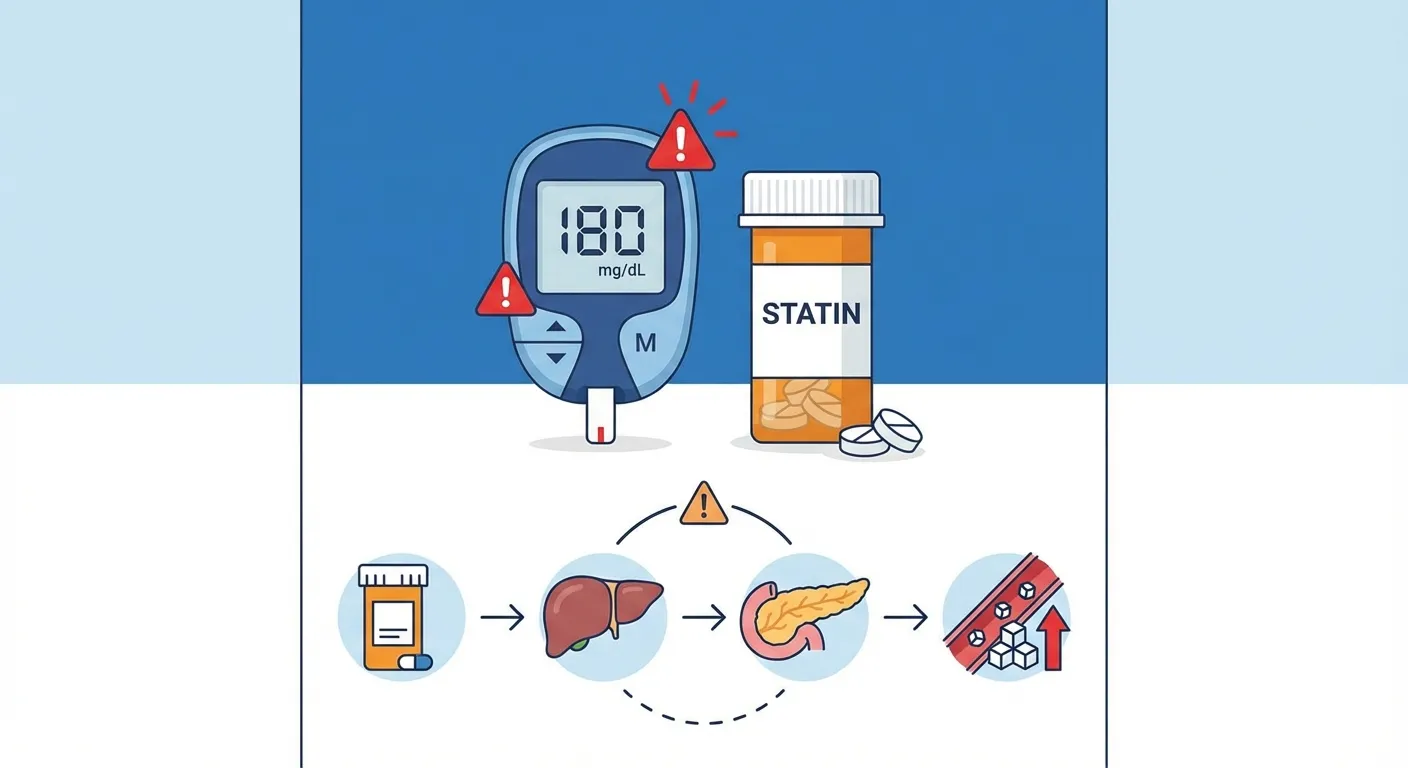
If you’re already pre-diabetic (and many adults over 40 are without knowing it), statins may push you across the diagnostic threshold into type 2 diabetes. Your doctor treats your cholesterol and inadvertently worsens your blood sugar. Then you’re on a statin and a diabetes medication.
The question nobody asks: was the cholesterol number worth creating a new metabolic problem?
3. Muscle pain is real, even if it’s rarer than we thought
The Lancet analysis found that only about 1% of statin users experience truly drug-attributable muscle symptoms. That’s lower than the 10-30% often reported in observational studies.
But the 1% number misses the severity spectrum. Most muscle symptoms are mild aches. A small number of cases progress to rhabdomyolysis — severe muscle breakdown that can damage kidneys. The rate is roughly 2-3 per 100,000 patient-years. Rare, but catastrophic when it happens.
What I hear from my clients is subtler: not dramatic muscle pain, but a gradual loss of exercise tolerance, longer recovery times, and a sense that their body doesn’t respond to workouts the way it used to. Whether that’s directly statin-caused or coincidental aging is genuinely hard to untangle.
4. Statins don’t address the root cause
This is the fundamental issue. Statins lower your LDL cholesterol number. But elevated LDL is a marker — it’s pointing to something else going on. What’s driving it?
- Chronic inflammation, often from diet, stress, poor sleep, or gut dysfunction
- Insulin resistance, which independently raises cardiovascular risk
- Oxidative stress from processed food, environmental toxins, or nutrient deficiencies
- Thyroid dysfunction — hypothyroidism directly elevates cholesterol
Lowering the number without addressing what’s causing the number is like turning off a fire alarm instead of putting out the fire. The risk factors that actually drive heart disease (inflammation, insulin resistance, oxidative damage) remain untouched.
5. The benefit for primary prevention is smaller than you think
“Primary prevention” means you don’t have heart disease yet. The statin is preventive.
The numbers are sobering. For primary prevention, you need to treat roughly 100 people for one year to prevent one cardiovascular event. The other 99 got no benefit but were exposed to side effects and cost.
For secondary prevention, meaning you’ve already had a heart attack or stroke, the benefit is substantially clearer and the risk-benefit ratio shifts. In this population, statins save lives.
The question is whether YOU specifically benefit from the prescription. That requires a real conversation about your 10-year cardiovascular risk score, not a reflexive response to a cholesterol number.
6. There are effective alternatives that get ignored
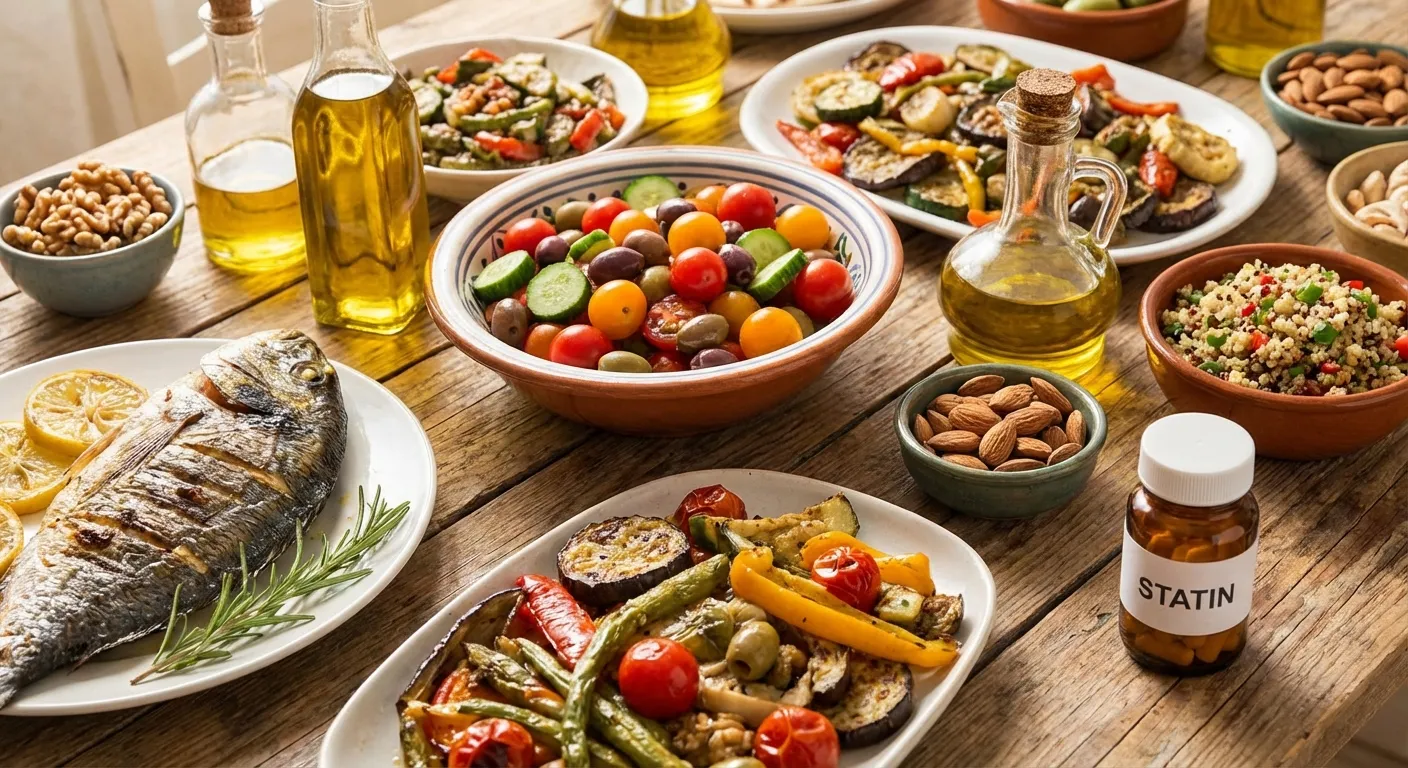
Before accepting a statin prescription, have you genuinely tried:
- Mediterranean diet, consistently shown to reduce cardiovascular events by 25-30% in major trials
- Omega-3 fatty acids — EPA specifically reduces cardiac risk independent of cholesterol levels
- Fiber supplementation — psyllium (Metamucil) can lower LDL 5-10% naturally
- Vitamin D optimization, since deficiency is independently associated with cardiovascular risk
- Exercise — 150 minutes of moderate activity per week reduces cardiac risk comparably to many medications
- Stress management — chronic stress and poor sleep are independent cardiovascular risk factors
Most of my clients have never been asked these questions. They got a cholesterol number, got a prescription, and were told to come back in three months.
7. Statins may interfere with your weight loss
A 2024 study published in Cell Metabolism found that statins reduce GLP-1 levels — the same hormone targeted by weight-loss drugs like Ozempic — through disruption of gut microbiome bacteria (specifically Clostridium species). This leads to glucose intolerance and may explain why some statin users struggle with weight and blood sugar management.
If you’re taking a statin AND trying to lose weight, you may be fighting a biological headwind that nobody told you about. Your medication could be suppressing the very hormone system that regulates your appetite and blood sugar.
Source: Cell Metabolism 2024 — Statins, Gut Microbiome, and GLP-1
What you should actually do
If you’re already on statins:
- Don’t stop suddenly. Talk to your doctor first. Abrupt discontinuation can be risky
- Ask the hard question: “Based on MY specific risk factors, is this statin preventing a heart attack, or just lowering a number?”
- Request advanced cardiac testing: LDL particle number (LDL-P), apolipoprotein B (ApoB), and coronary artery calcium (CAC) score give a far more accurate picture of your actual risk than total LDL alone
- Monitor blood sugar: Request fasting insulin and HbA1c alongside your lipid panel. Make sure the statin isn’t creating a new problem
- Pair with lifestyle changes: Even if you stay on the statin, the dietary and lifestyle interventions above provide additional protection the drug can’t
If you’re considering statins:
- Get your actual 10-year risk calculated. The ACC/AHA ASCVD calculator uses your age, blood pressure, cholesterol, and other factors to determine your real risk percentage
- Try lifestyle changes first — 3-6 months of genuine dietary change, exercise, and stress management. Recheck your lipids. Many people see real improvement
- Get a second opinion, especially from someone who understands both the pharmaceutical and the functional side
The bottom line
Statins have a role. For secondary prevention, people who’ve already had cardiac events, they save lives. That’s not in question.
But the reflexive prescribing of statins to every adult with elevated cholesterol, without investigating why cholesterol is elevated, without trying lifestyle interventions first, and without monitoring for metabolic side effects? That deserves questioning.
Your heart health is worth more than a cholesterol number on a lab report.
Want to understand your real cardiovascular risk and whether your statin is helping or hurting? Call (512) 658-0515 for a free 30-minute clarity call. I’ll review your labs, your medications, and your complete metabolic picture.
— Irina Plakas, RPh
Certified Health Coach | Dripping Springs, TX
📞 (512) 658-0515 | Mon-Fri 9AM-5PM CT
FAQ
Should I stop taking my statin after reading this?
No. Never stop a prescribed medication without your doctor’s guidance. This article is about asking better questions and understanding the full picture — not about stopping treatment that may be protecting you. Have an informed conversation with your prescriber.
Are statins ever truly necessary?
Yes — particularly for secondary prevention (after a heart attack or stroke) and for people with very high cardiovascular risk. The benefit in these populations is well-established. The debate centers around primary prevention in lower-risk individuals where the risk-benefit ratio is less clear.
What tests should I ask for instead of just a cholesterol panel?
Request LDL particle number (LDL-P or ApoB), fasting insulin, hs-CRP (inflammation), HbA1c, and ideally a coronary artery calcium (CAC) score. These give a far more accurate picture of actual cardiovascular risk than LDL cholesterol alone.
Can lifestyle changes really replace a statin?
For many primary prevention patients — yes. Mediterranean diet, exercise, omega-3s, fiber, stress management, and optimizing vitamin D and sleep can produce LDL reductions of 15-30% while simultaneously addressing the root causes that drive cardiovascular risk. But this requires genuine, sustained commitment — not a halfhearted attempt.
How can a pharmacist help with my statin decision?
I can review your complete medication list for interactions, interpret your labs through both conventional and functional lenses, calculate your actual cardiovascular risk, identify root causes of elevated cholesterol, and present the full range of options — including lifestyle, supplements, and medication adjustments — so you can make an informed decision with your doctor.
 Unlock Your Path to Vibrant Health: A Holistic Guide for Health and Longevity