
Does Your Circadian Rhythm Drastically Shift as You Age?

Does Your Circadian Rhythm Drastically Shift as You Age?
Circadian rhythm disruptions, as women enter midlife, often contribute to a host of new health challenges and changes, from the onset of menopause to shifts in metabolic rates and sleep patterns. One critical yet often overlooked aspect that can significantly impact overall well-being is the circadian rhythm—the body’s natural 24-hour cycle that regulates sleep, wakefulness, and numerous physiological processes. For midlife women, paying attention to and optimizing circadian rhythms can be a key strategy for maintaining health and vitality.
What is Circadian Rhythm?
Circadian rhythms are the physical, mental, and behavioral changes that follow a daily cycle, primarily responding to light and darkness in an organism’s environment. Found in nearly all living things, these rhythms are controlled in humans by a central clock in the hypothalamus of the brain.
Age-Related Changes in Circadian Rhythms
As women age, particularly during midlife and the menopausal transition, their circadian rhythms often undergo noticeable shifts. These changes can disrupt the internal clock’s sensitivity to environmental cues like light, complicating the maintenance of a regular sleep-wake cycle. Furthermore, hormonal changes, particularly in melatonin and estrogen levels, significantly impact these rhythms. Melatonin naturally declines with age, potentially delaying sleep onset and reducing sleep duration, while decreasing estrogen levels can disrupt sleep patterns and affect how the body responds to daily rhythms.
These hormonal shifts may result in a phase advance, where women find themselves feeling sleepy earlier in the evening and waking up earlier in the morning. They may also experience more fragmented sleep, making it challenging to stay asleep throughout the night. These disturbances are not merely inconvenient; they can lead to serious health issues, including increased risks of cardiovascular diseases, weight gain, and depression.
Recognizing and adapting to these changes is crucial. Implementing disciplined sleep hygiene practices, such as establishing a consistent bedtime routine and managing light exposure effectively, can be incredibly beneficial. Health professionals may also recommend treatments like melatonin supplements or hormone therapy to help balance the natural declines in hormone levels and support a more regular circadian rhythm.
The Impact of Circadian Rhythms on Health
Circadian rhythms influence essential body functions like hormone release, eating habits, body temperature, and notably, sleep cycles. Disruptions in these rhythms can lead to various health issues, including sleep disorders, obesity, diabetes, and depression, which midlife women may find particularly impactful as they often coincide with hormonal changes associated with menopause.
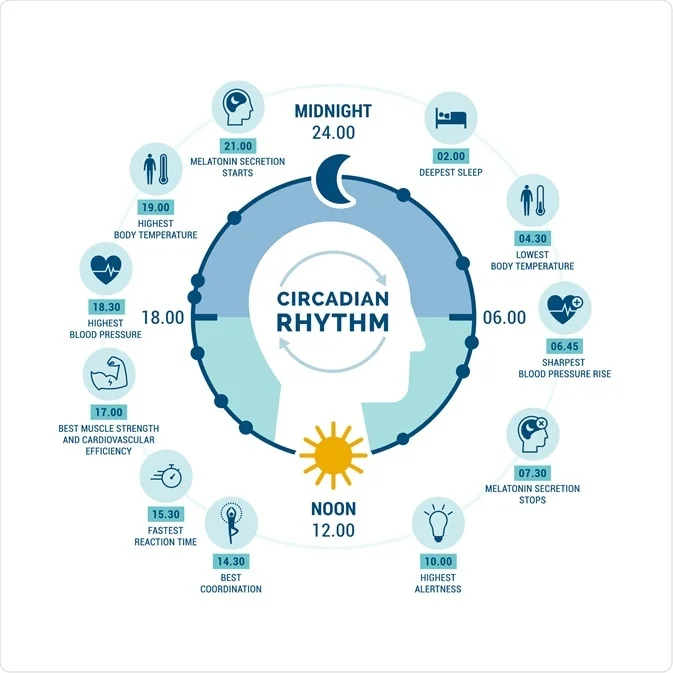
Here is a chart from News Medical that shows the circadian rhythm cycle.
Strategies to Support Circadian Health
Light Exposure
Proper light exposure is a critical aspect of maintaining and optimizing circadian rhythms. Sunlight plays a pivotal role by signaling the brain to wake up and get moving, which helps to regulate the sleep-wake cycle and other body functions. For midlife women, optimizing light exposure can be particularly beneficial in combating the sleep disturbances that often accompany menopause.
Morning Sunlight
Aiming to get at least 20 to 30 minutes of natural sunlight exposure within the first few hours after waking can profoundly influence the entire day’s rhythm. Morning light is especially potent as it contains higher levels of blue light, which is most effective at resetting our internal clocks. This practice not only helps to improve alertness throughout the day but also enhances mood and overall energy levels.
Throughout the Day
Maintaining a regular pattern of light exposure during the day keeps the circadian rhythm from drifting, which can lead to sleep problems at night. If you work indoors, try to position your workspace near a window to benefit from natural light. Alternatively, consider using a light therapy box, especially during the winter months when daylight hours are shorter.
Evening Light Management
As important as it is to get exposure to morning light, managing light exposure in the evening is equally crucial. Exposure to blue light, which is emitted in large amounts by screens such as those on smartphones, tablets, and computers, should be minimized in the hours leading up to bedtime. Blue light suppresses the production of melatonin, the hormone that signals our bodies to prepare for sleep. Using apps or settings that filter out blue light, wearing glasses that block blue light, or simply avoiding screens at least an hour before bed can help maintain a healthy circadian rhythm.
Sleep Environment
In addition to managing light exposure during waking hours, it’s important to consider the sleeping environment. Ensure that the bedroom is dark at bedtime to promote optimal sleep conditions. Using heavy curtains or an eye mask can block out unwanted light, and dimming or turning off electronics can further aid in creating a conducive environment for sleep.
By strategically managing light exposure throughout the day and maintaining a dark environment at night, midlife women can significantly improve their circadian rhythm, leading to better sleep and overall health. This is particularly beneficial as the body navigates through hormonal changes and adjusts to new patterns of physical and emotional health.
Consistent Sleep Schedules
Going to bed and waking up at the same time every day, even on weekends, can strengthen circadian rhythms and improve sleep quality. Consistency reinforces the natural cycle and makes it easier for the body to anticipate and prepare for rest.
Diet and Exercise
Aligning meal times and physical activity with the body’s natural rhythms can also improve circadian health. For instance, engaging in physical activity during daylight hours and avoiding heavy meals close to bedtime can enhance the body’s natural cycles and boost sleep quality.
Mindfulness and Relaxation Techniques
Engaging in practices like meditation, yoga, and deep-breathing exercises can alleviate stress and realign circadian rhythms, proving particularly beneficial for enhancing sleep and managing mood swings.
In conclusion, for midlife women, understanding and managing circadian rhythms is a powerful strategy for navigating the complexities of this life stage. By adopting lifestyle habits that support natural circadian rhythms, it is possible to enhance sleep, metabolic health, and mood stability. Consulting healthcare providers is recommended when making significant lifestyle changes, especially when addressing health conditions or treatments related to menopause and midlife changes.
 Unlock Your Path to Vibrant Health: A Holistic Guide for Health and Longevity