
Does KFC Use Seed Oils?
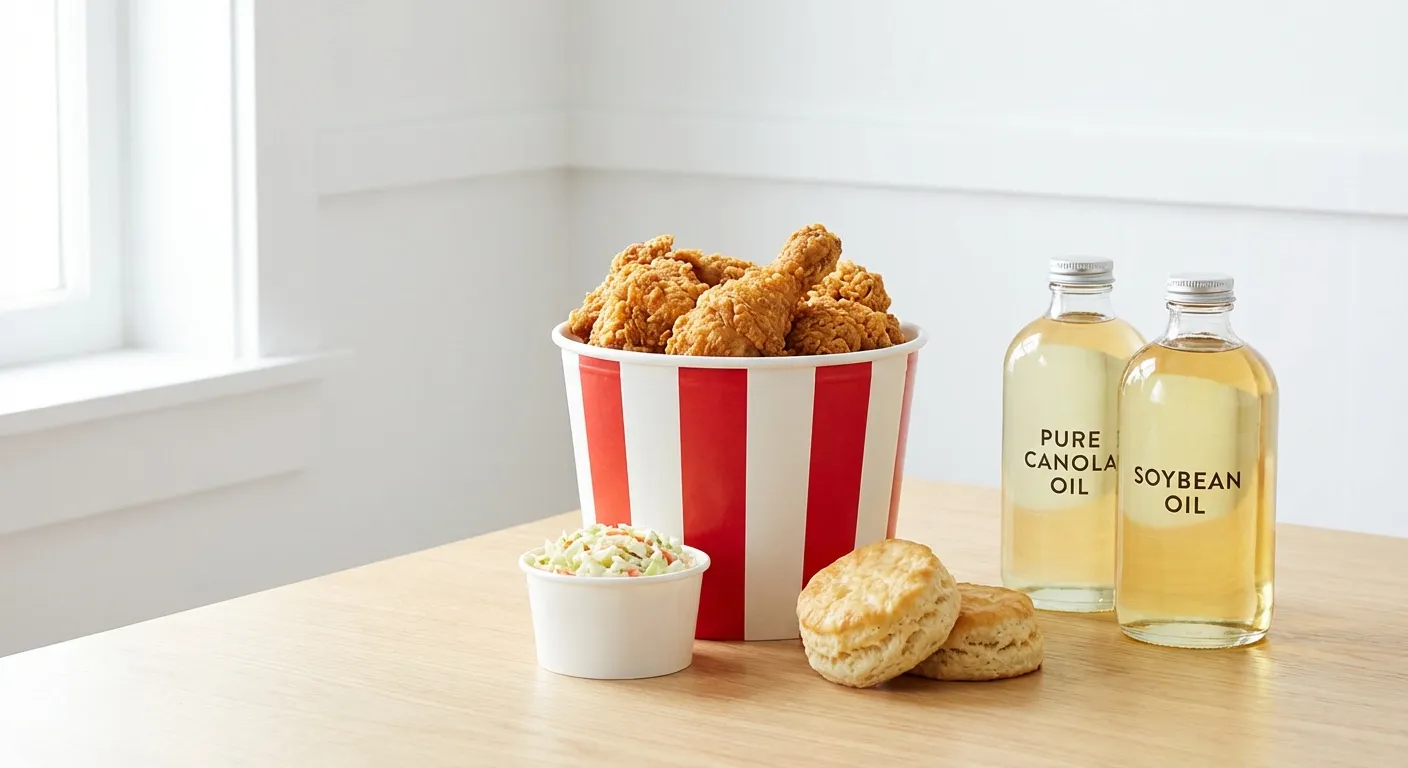
If you’re wondering “does kfc use seed oils,” here’s the short answer.
Yes, KFC uses seed oils. KFC’s frying blend contains canola oil and hydrogenated soybean oil with TBHQ preservative. Some locations use low linolenic soybean oil as an alternative. Nearly the entire menu passes through this fryer.
Which Seed Oils Are Used?
- Canola oil
- Hydrogenated soybean oil
Where Do They Appear on the Menu?
The primary frying blend contains canola oil and hydrogenated soybean oil (with TBHQ and citric acid as preservatives, dimethylpolysiloxane as anti-foaming agent). This covers Original Recipe, Extra Crispy, tenders, popcorn chicken, and fries. Biscuits and sides may contain additional seed oils.
What We Recommend Instead
KFC’s grilled chicken (where available) avoids the fryer, but verify the seasoning ingredients. Everything else is fried in canola and hydrogenated soybean oil with TBHQ. Make fried chicken at home in avocado oil or tallow instead.
Clean swaps:
- Make fried chicken at home in avocado oil or beef tallow
- Bake chicken thighs with herbs and ghee
What Are Seed Oils?
Seed oils are vegetable oils extracted from seeds using chemical solvents, high heat, and deodorization. The most common ones are soybean oil, canola oil, corn oil, sunflower oil, safflower oil, and cottonseed oil.
They’re in most processed foods and restaurant kitchens because they’re cheap to produce at scale. Before the 1950s, Americans cooked with butter, tallow, and olive oil. Seed oils replaced all of them.
Why Do People Avoid Seed Oils?
Seed oils are high in omega-6 fatty acids. The typical American diet already has far more omega-6 than omega-3, and seed oils make that imbalance worse. Excess omega-6 is linked to chronic inflammation.
People who cut seed oils often notice differences in their skin, digestion, and joint pain. The easiest swap is cooking with olive oil, butter, coconut oil, avocado oil, or beef tallow instead.
Watch Out for These Label Tricks
Seed oils are just the start. When reading ingredient labels, also watch for:
- “Natural flavors” – a catch-all term that can hide hundreds of chemical compounds. The FDA allows manufacturers to list almost anything under this label without disclosure. If a product needs “natural flavors” to taste good, the real ingredients probably aren’t doing much.
- “Vegetable oil” – almost always means soybean oil. The word “vegetable” makes it sound healthy, but these oils come from seeds, not vegetables.
- TBHQ – a synthetic preservative added to seed oils to extend shelf life. Found in Crisco, Pop-Tarts, Maruchan Ramen, and many fryer oils.
- “And/or” oil blends – when a label says “canola and/or soybean and/or corn oil,” the manufacturer uses whichever seed oil is cheapest that week.
The Bottom Line
There is no genuinely clean option at KFC. If you are serious about avoiding seed oils and processed ingredients, skip this restaurant and cook at home using approved fats like avocado oil, ghee, or grass-fed tallow.
Ready to Clean Up Your Diet for Good?
Cutting seed oils is a great first step, but it is just the beginning. A health coach can help you identify every hidden ingredient working against you and build a whole-food eating plan you can actually stick with. Book a free discovery call to see if coaching is right for you.
Related Pages
- Seed Oil Guide: Complete List of Products and Restaurants
- Does Chick-fil-A Use Seed Oils?
- Does Popeyes Use Seed Oils?
- Does Wingstop Use Seed Oils?
Disclaimer: This information was researched and verified as of February 2026. Ingredients and recipes may change without notice. Always check current labels or ask restaurant staff for the most up-to-date information. This content is for informational purposes only and does not constitute medical advice.
 Unlock Your Path to Vibrant Health: A Holistic Guide for Health and Longevity