
Spermidine Benefits: Top Foods & How to Boost Longevity Naturally
Spermidine Benefits: Top Foods & How to Boost Longevity Naturally
Spermidine, this naturally occurring compound is gaining attention for its ability to promote cellular renewal, protect the heart and brain, and even extend healthy lifespan. And here’s the best part — you don’t need exotic superfoods or expensive pills to get it. Many everyday foods, including some fermented favorites, are rich in spermidine.
If you’re interested in healthy aging, you’ve probably heard about collagen, antioxidants, and omega-3s. But there’s another nutrient making waves in longevity research — spermidine.
Let’s explore what spermidine is, why it matters, the research behind it, and how to easily add it to your diet.
What is Spermidine?
Spermidine is a polyamine, a small molecule found in all living cells. It plays a role in cell growth, DNA stability, and protein synthesis.
Its most exciting role for health enthusiasts? Activating autophagy — the body’s process of cleaning out damaged cells and regenerating newer, healthier ones.
Think of autophagy as your body’s “spring cleaning” at the cellular level. By removing faulty parts, cells work more efficiently, inflammation decreases, and the risk of disease may be reduced.
🔬 Fun fact: Autophagy is also triggered by fasting, but spermidine may allow you to tap into some of those same benefits without prolonged calorie restriction.
Why Spermidine Levels Drop With Age
When we’re young, our bodies make plenty of spermidine. But production slows over time, and dietary intake often decreases with modern, processed-food-heavy diets. This decline is thought to contribute to the aging process.
Research suggests that increasing spermidine intake in later years may help counteract some of this natural drop-off and support longevity.
Science-Backed Benefits of Spermidine
1. Cell Renewal & Longevity
By stimulating autophagy, spermidine helps cells remove waste and regenerate — processes linked to longer lifespans in animal studies and better health outcomes in humans.
2. Heart Health
A 2018 study in The American Journal of Clinical Nutrition found that people with higher spermidine intake had lower blood pressure and reduced risk of cardiovascular disease.
3. Brain Protection & Memory
Animal studies indicate spermidine may protect against cognitive decline by reducing inflammation and oxidative stress in brain cells. Some researchers are exploring its role in conditions like Alzheimer’s and Parkinson’s disease.
4. Skin, Hair & Nails
Cell renewal isn’t just about longevity — it also shows up on the outside. Spermidine may help maintain skin elasticity, encourage hair growth, and prevent brittle nails.
5. Metabolic & Blood Sugar Support
Emerging evidence suggests spermidine may improve insulin sensitivity, helping with blood sugar balance and potentially lowering type 2 diabetes risk.
Top Foods Rich in Spermidine
You can boost your spermidine intake naturally by including these foods in your weekly diet:
Wheat Germ – The richest natural source, great sprinkled over yogurt or smoothies
Aged Cheese – Cheddar, gouda, parmesan (moderation if watching saturated fat)
Mushrooms – Shiitake and maitake are particularly high
Legumes – Lentils, chickpeas, green peas
Nuts & Seeds – Pumpkin seeds, sunflower seeds
Whole Grains – Oats, brown rice
Broccoli & Cauliflower – Lightly steamed to preserve nutrients
Mango – Adds a sweet spermidine boost
Sauerkraut – Rich in spermidine and gut-friendly probiotics (choose raw, unpasteurized)
Kimchi – Fermented cabbage with spermidine, probiotics, and antioxidant spices
💡 Pro Tip: Combine multiple sources in one meal — for example, a lentil and mushroom stew topped with pumpkin seeds and a side of sauerkraut — for a spermidine-rich, nutrient-dense plate.
How Much Spermidine Do You Need?
Longevity research target: Studies linking spermidine to health benefits often estimate ~10–15 mg/day total from all foods combined. For reference:
Shiitake Mushrooms
Spermidine content: ~3–6 mg per 100 g (about 3.5 oz) fresh; higher when dried (more concentrated).
Practical daily amount:
Fresh shiitake – ~3 oz (about 1 cup sliced, cooked) gives ~3–5 mg spermidine.
Dried shiitake – smaller portion (~0.7–1 oz dried) equals similar spermidine levels due to water loss.
💡 This means 1 cup cooked shiitake daily is a strong contributor toward your spermidine goal, but you’d still combine it with other foods (aged cheese, legumes, seeds) to reach the 10–15 mg mark.
Sauerkraut
Spermidine content: ~2–6 mg per 100 g (about 3.5 oz), varies widely by cabbage type and fermentation time.
Probiotic bonus: Raw, unpasteurized sauerkraut supports gut microbiome health, which may enhance nutrient absorption — including spermidine.
Practical daily amount:
~3–4 oz (½ cup) raw sauerkraut gives ~1.5–3 mg spermidine.
Eating ½–1 cup daily ensures a steady intake and probiotic benefits.
1 tablespoon of wheat germ contains ~2–4 mg
1 ounce of aged cheddar has ~2 mg
½ cup cooked lentils has ~1.5 mg
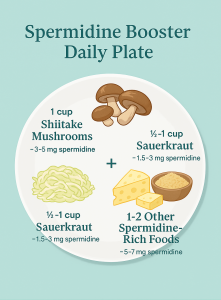
Daily Spermidine Strategy
If you want to boost your system:
1 cup cooked shiitake mushrooms (~3–5 mg spermidine)
½–1 cup raw sauerkraut (~1.5–3 mg spermidine)
Add 1–2 other spermidine-rich foods — e.g., 1 Tbsp wheat germ (~2–4 mg), 1 oz aged cheddar (~2 mg), or ½ cup lentils (~1.5 mg) — to easily hit 10–15 mg/day.
Spermidine & Longevity Nutrient Synergy
Spermidine pairs well with other anti-aging nutrients:
Vitamin D3 – Spermidine supports vitamin D activation for bone, immune, and mood benefits.
Vitamin K2 – Helps direct calcium into bones instead of arteries, reducing cardiovascular risk.
Magnesium – Supports cellular function and works alongside spermidine in energy production.
Should You Supplement with Spermidine?
While spermidine supplements are becoming popular, research on long-term safety is still developing. Most experts recommend focusing on food sources first.
If you choose supplements:
Look for clinically tested forms
Start low and monitor how you feel
Talk with your healthcare provider, especially if you take medication or have chronic conditions
The Bottom Line
Spermidine is a promising nutrient for healthy aging with benefits for your heart, brain, skin, metabolism, and longevity.
By eating a variety of spermidine-rich foods — from wheat germ and lentils to sauerkraut and kimchi — you can naturally support your body’s cell renewal process.
Small, consistent dietary changes really can make a big impact on how you age. Start adding 1–2 spermidine-rich foods to your meals this week and give your cells the boost they deserve.
 Unlock Your Path to Vibrant Health: A Holistic Guide for Health and Longevity