
Peptides Like BPC-157: What a Pharmacist Wants You to Know Before You Inject
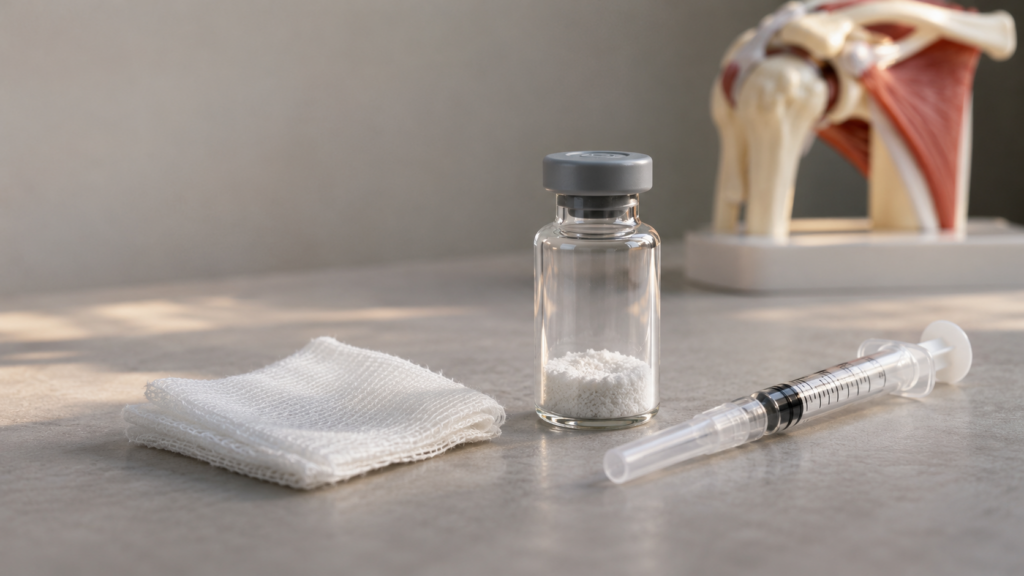
A guy at your gym swears it healed his shoulder. A wellness clinic is offering it by injection. A website sells it in a tiny vial labeled "for research use only." And your favorite podcast host says peptides are the future of medicine.
Peptides are everywhere right now, and BPC-157 is the name you hear most.
Before you put a needle in your stomach, there's something you need to know: BPC-157 isn't an FDA-approved drug. A July 2026 vote that made headlines didn't change that. And much of what you're hearing comes from people who make money selling it.
As a registered pharmacist with 25+ years of experience, I want you to have the facts before you decide what goes into your body.
What is a peptide?
A peptide is a short chain of amino acids, the building blocks of protein. Your body makes thousands of them.
Here's where the confusion starts. "Peptide" doesn't mean natural, safe, or unapproved. Insulin is a peptide hormone. So is semaglutide, the drug in Ozempic and Wegovy. Those medications went through clinical trials and FDA review.
BPC-157 is a different story. So are many others being promoted online, such as TB-500. The word on the label tells you nothing about whether a product has been proven safe or effective.
What is BPC-157?
BPC-157 is a lab-made peptide based on a protein fragment first studied from stomach juices. It's promoted for injuries, tendon repair, gut healing, and recovery.
The appeal is easy to understand. In animal studies, it has shown effects on tissue healing. But here's the catch: rats aren't people. Human research is limited, and the data we have is nowhere near what we'd expect from an approved drug.
You may read that it has a "desirable safety profile" with few reported side effects. Be careful with that. Few reported side effects in limited research isn't the same as proven safety. It may just mean we haven't looked hard enough or long enough.
What's going on with the FDA?
This has changed quickly, and a lot of what's online is misleading. Here's the timeline as of this writing:
- Late 2023: The FDA placed BPC-157 in Category 2, the group of substances raising significant safety concerns for compounding. Its stated concerns were immune reactions, peptide-related impurities, and a lack of safety data.
- February 2026: HHS Secretary Robert F. Kennedy Jr. said most restricted peptides would be considered for reclassification.
- April 2026: BPC-157 was removed from Category 2 after nominations were withdrawn. That did not place it on the approved compounding list.
- July 23, 2026: An FDA advisory committee voted 8 to 6, with one abstention, to recommend adding BPC-157 to the list of substances allowed in compounding.
Read this part twice. The vote was advisory, not final. FDA staff themselves said the criteria weigh against putting it on the list, because evidence of effectiveness is limited. The panel went against that recommendation, and formal rulemaking was still ahead when I wrote this.
A "yes" vote from a committee doesn't mean FDA approved, and it doesn't mean proven. Even if BPC-157 is added to that list one day, that would allow compounding. It wouldn't mean the drug has been shown to work.
So when you see "FDA cleared BPC-157" on a website, be skeptical.
The real risks of peptides
1. You may not know what's in the vial
This is the biggest concern for me as a pharmacist. Products sold online as "research peptides" aren't made for human use. Grey-market peptides carry well-documented safety risks. The vial may contain the wrong dose, contaminants, or something else entirely. Never inject a product labeled "for research use only."
2. Injections carry their own risks
Whenever you inject something, you risk infection, particularly when mixing vials at home. Sterility matters, and a bathroom counter isn't a pharmacy clean room.
3. Your immune system may react
Immunogenicity was one of the FDA's concerns. In plain English, your body may see the peptide or its impurities as a threat and mount an immune reaction.
4. Nobody knows the long-term effects
We don't have long-term safety studies in people. We don't know what years of use do to the body, how it interacts with your medications, or whether it's safe with a history of cancer. If you have a history of cancer, are pregnant, or take several medications, this isn't something to experiment with.
5. It may be banned in your sport
BPC-157, TB-500, and CJC-1295 are all on the World Anti-Doping Agency's 2026 prohibited list. If you compete, that matters.
6. It can distract you from the real problem
Persistent joint pain, gut symptoms, and fatigue all deserve a proper diagnosis. A peptide could delay finding out what's really wrong.
Why are peptides so popular?
I get why people are interested. If you've been hurting for months, or feel like doctors aren't listening, a promise of healing is powerful. I'd never judge you for looking for answers.
But look at who's talking. Many of the most enthusiastic sources are clinics, sellers, and influencers who profit from the sale. When someone's selling you the solution, keep your guard up.
Questions to ask before you try any peptide
If you're still considering one, ask:
- Is this FDA-approved for what I'm using it for?
- What human studies support it, and in whom?
- Where is it made, and who tested it?
- Is it legal for this clinic or pharmacy to provide it right now?
- What are the risks, and how will you monitor me?
- How does it interact with my medications?
If nobody can answer those questions clearly, that's your answer.
What works while we wait for better evidence
I know this is less exciting than a miracle vial, but these have far more evidence behind them:
- Injuries: A proper diagnosis and physical therapy
- Recovery: Good sleep, enough protein, and progressive strength training
- Gut symptoms: A medical workup, a medication review, and targeted nutrition. Start with how to improve gut health naturally
- Low energy: Labs, sleep, and a closer look at your medications
What to do right now
Step 1: If you've bought a "research use only" peptide, don't inject it.
Step 2: If you're already using a peptide, tell your doctor and pharmacist. Don't hide it, since it could affect your care. If you have a fever, redness or swelling at the injection site, or trouble breathing, get medical help.
Step 3: Write down the problem you're really trying to solve, and get it properly evaluated.
Step 4: Book a free clarity call. As a registered pharmacist and certified health coach, I'll help you review your medications and supplements, cut through the marketing, and build a nutrition and lifestyle plan around your real goals. Medical decisions stay with your doctor.
The bottom line
Peptides are real science, and some are life-changing medications. But BPC-157 isn't one of them, at least not yet. As of this writing, it isn't FDA-approved, the evidence in humans is thin, and you often can't be sure what's in the vial.
A committee vote is not proof. Your body deserves better than an experiment.
FAQ
Is BPC-157 FDA-approved?
No. In July 2026, an FDA advisory committee voted 8 to 6 to recommend adding it to the compounding list, but that vote is not binding, and it isn't an approval.
Are peptides safe?
It depends on the peptide. FDA-approved peptide drugs have been studied for safety. Unapproved peptides such as BPC-157 lack long-term human safety data, and products sold online may be impure or mislabeled.
Can I buy BPC-157 legally?
The rules are changing, and a compounding path wasn't finalized as of this writing. Avoid "research use only" products, which aren't made for human use. Ask your doctor or pharmacist about the current status.
Does BPC-157 heal injuries?
Animal studies suggest possible effects on healing, but human research is limited. It hasn't been proven to heal injuries in people.
Sources
- ABC News: FDA advisory committee votes to add BPC-157 to compounding list
- TIME: An FDA committee voted in favor of peptides, despite the agency's opposition
- BPC-157 in 2026: Why Regulatory Limbo Is Not the Same as a Green Light
- BSCG: What's changing with peptide regulation in 2026
- Multifunctionality and Possible Medical Application of the BPC 157 Peptide
This article is for general education and is not medical advice. Talk to your doctor or pharmacist before starting any peptide, medication, or supplement. Regulations may change. Individual results vary.
 Unlock Your Path to Vibrant Health: A Holistic Guide for Health and Longevity