
7 Science-Backed Amazing Health Benefits of Raw Sauerkraut
7 Science-Backed Amazing Health Benefits of Raw Sauerkraut & Easy Homemade Recipe
If you’re looking for a simple, affordable way to boost your gut health, improve digestion, and strengthen your immune system, sauerkraut might be your new best friend.
This traditional fermented food has been used for centuries not just as a tangy condiment, but as powerful medicine. Raw sauerkraut is packed with live probiotics, enzymes, and vitamins that support everything from digestion to mental clarity.
The best part? You can easily make homemade sauerkraut in your own kitchen with just two ingredients: organic cabbage and sea salt.
In this guide, you’ll discover:
The science-backed health benefits of sauerkraut
Why raw sauerkraut is superior to store-bought versions
A foolproof recipe for making your own fermented sauerkraut at home
Tips for incorporating this gut-healing superfood into your daily diet
Let’s dive in!
What Is Sauerkraut?
Sauerkraut is finely shredded cabbage that has been fermented by lactic acid bacteria. The word literally means “sour cabbage” in German, and it’s been a staple in European cuisine for hundreds of years.
The fermentation process:
Salt draws water out of the cabbage
Natural bacteria (primarily Lactobacillus) consume the sugars in the cabbage
This produces lactic acid, which preserves the cabbage and creates that signature tangy flavor
Raw vs. Pasteurized Sauerkraut: What’s the Difference?
Most store-bought sauerkraut you find in cans or shelf-stable jars has been pasteurized (heat-treated), which kills the beneficial bacteria.
Raw sauerkraut, on the other hand, is unpasteurized and contains:
Live probiotics (billions per serving!)
Active enzymes that aid digestion
Higher vitamin C content (heat destroys some nutrients)
Pro tip: Look for sauerkraut in the refrigerated section of your grocery store, or better yet make your own!
7 Science-Backed Health Benefits of Raw Sauerkraut
1. Sauerkraut Supports Gut Health & Digestion
Raw sauerkraut is one of the richest natural sources of probiotics—the beneficial bacteria that keep your gut microbiome balanced.
Benefits for your gut:
Improves digestion and reduces bloating
Helps with constipation and regularity
May reduce symptoms of IBS (irritable bowel syndrome)
Supports intestinal barrier function (reduces “leaky gut”)
A single serving of homemade sauerkraut can contain trillions of live probiotic bacteria—far more than most probiotic supplements!
2. Boosts Immune System Function
Did you know that 70-80% of your immune system lives in your gut? When you eat probiotic-rich sauerkraut, you’re directly supporting your body’s defense system.
How sauerkraut strengthens immunity:
Probiotics help regulate immune response
High in vitamin C (one cup provides ~35% of daily needs)
Contains antioxidants that fight inflammation
May reduce duration and severity of colds
3. Promotes Weight Loss & Metabolic Health
If you’re trying to lose weight, sauerkraut can be a helpful addition to your diet.
Why sauerkraut supports weight loss:
Very low in calories (only ~27 calories per cup)
High in fiber, which promotes satiety
Probiotics may improve insulin sensitivity
Supports healthy metabolism and fat burning
Reduces inflammation that can block weight loss
Studies show that people with diverse gut bacteria tend to have healthier body weight and better metabolic markers.
4. Improves Mental Health & Mood
The gut-brain connection is real, and fermented foods like sauerkraut play a crucial role in mental wellness.
How sauerkraut affects your brain:
Probiotics produce neurotransmitters like serotonin and GABA
May reduce symptoms of anxiety and depression
Supports cognitive function and mental clarity
Helps regulate stress response
Some researchers call the gut your “second brain”—and feeding it probiotic-rich sauerkraut is like giving your mood a natural boost!
5. Strengthens Bones & Reduces Inflammation
Sauerkraut is surprisingly rich in vitamin K2, especially if you ferment it for several weeks.
Benefits for bone and joint health:
Vitamin K2 helps calcium get into bones (not arteries)
May reduce risk of osteoporosis
Anti-inflammatory properties help with joint pain
Contains beneficial compounds that support cartilage health
6. Supports Heart Health
The probiotics and fiber in raw sauerkraut can benefit your cardiovascular system.
Heart-healthy benefits:
May help lower cholesterol levels
Reduces inflammation linked to heart disease
Supports healthy blood pressure
Contains compounds that prevent plaque buildup in arteries
7. Enhances Nutrient Absorption
One of the most underrated benefits of sauerkraut: it helps you absorb MORE nutrients from the other foods you eat.
How fermentation increases bioavailability:
Breaks down anti-nutrients in cabbage
Enzymes pre-digest food, making nutrients more accessible
Vitamin C increases iron absorption from plant foods
B vitamins are created during fermentation
Eating just 1-2 tablespoons of sauerkraut with meals can significantly improve nutrient absorption!
How to Make Homemade Sauerkraut: Simple Step-by-Step Recipe
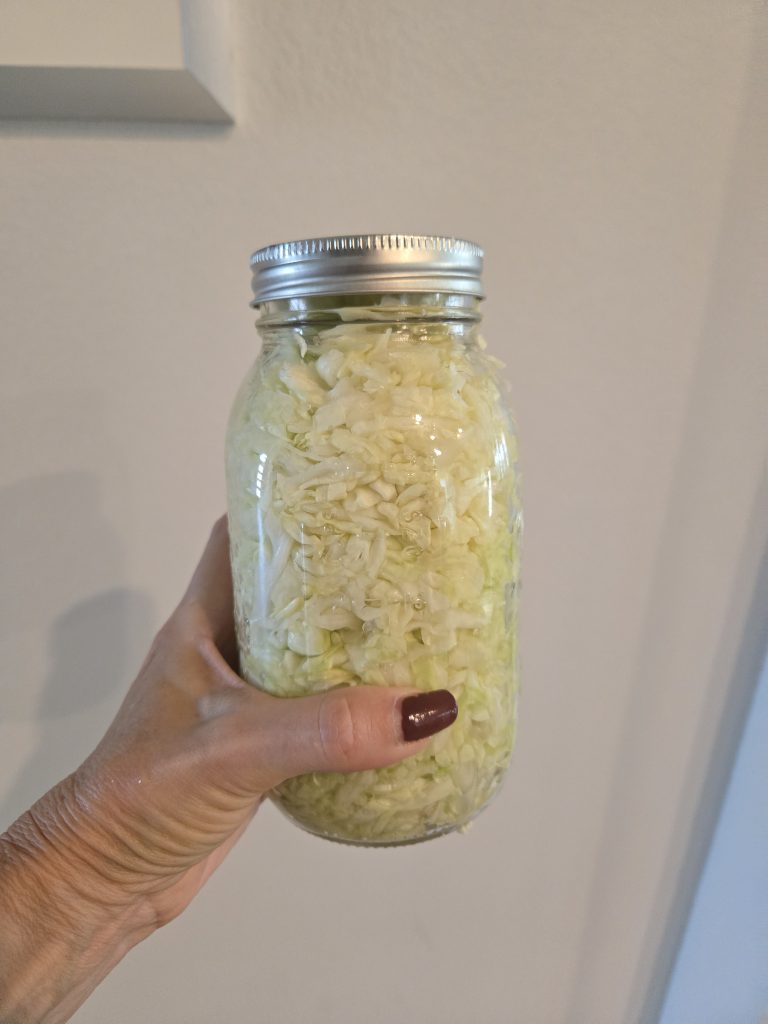
Making your own homemade sauerkraut is easier than you think and it costs just pennies per serving!
Ingredients:
1 medium head of organic green cabbage (~2-3 lbs)
1-1.5 tablespoons sea salt (avoid iodized salt it can inhibit fermentation)
Equipment:
Large mixing bowl
Clean glass jar with lid (quart-sized mason jar works perfectly)
Instructions:
Step 1: Prep Your Cabbage
Remove outer leaves from cabbage (save one clean leaf for later)
Cut cabbage into quarters and remove the core
Slice cabbage into thin ribbons (about ⅛-inch thick)
Place shredded cabbage in large mixing bowl
Step 2: Add Salt & Massage
Sprinkle salt over cabbage
Massage and squeeze cabbage with your hands for 5-10 minutes
The cabbage will release liquid and become limp this is what you want!
Let sit for 20 minutes
Tip: If your cabbage isn’t juicy enough, dissolve 1 tsp salt in ½ cup filtered water and add it.
Step 3: Pack Into Jar
Transfer cabbage and all its liquid into your clean glass jar
Pack it down firmly with your fist or a wooden spoon
Press out any air pockets
Leave at least 2 inches of space at the top (fermentation creates CO2!)
The brine should cover the cabbage completely
Step 4: Weight It Down
Take that reserved cabbage leaf and tuck it over the shredded cabbage
If cabbage floats above the brine, it can develop mold
Step 5: Cover & Ferment
Cover jar with lid.
Place jar on a plate (to catch any overflow)
Keep at room temperature (65-75°F) away from direct sunlight, in a dark kitchen cabinet
Check in 2-3 days and press down if cabbage rises above brine
Step 6: Taste & Store
Start tasting after 3-5 days (warmer = faster fermentation)
Sauerkraut is ready when it tastes tangy and pleasantly sour to you
Most people prefer 3-5 days of fermentation
Once it reaches your desired flavor, seal with tight lid and refrigerate
Refrigeration slows fermentation dramatically
Shelf life: Properly made sauerkraut can last 4-6 months in the refrigerator (often longer!).
How to Eat Sauerkraut for Maximum Benefits
Serving Size:
Start with 1-2 tablespoons per day and work up to ¼-½ cup daily.
Too much too fast can cause digestive upset if your gut isn’t used to probiotics!
Best Ways to Enjoy Sauerkraut:
✅ Straight from the jar (fork it!)
✅ On top of salads for tangy crunch
✅ With eggs (scrambled or fried)
✅ On avocado toast
✅ Alongside grilled meats (classic pairing)
✅ Mixed into grain bowls
✅ On burgers or hot dogs (obviously!)
✅ In smoothies (trust me—just a tablespoon adds probiotics without affecting flavor much)
🚫 Don’t cook it! Heat kills the beneficial probiotics. Always add sauerkraut to dishes AFTER cooking.
Buying Store-Bought Sauerkraut: What to Look For
If you’re not ready to make your own, here’s how to choose the best store-bought sauerkraut:
✅ Look For:
Refrigerated section (not shelf-stable cans)
“Raw” or “unpasteurized” on the label
Short ingredient list: cabbage, salt, water (maybe spices)
No vinegar (real fermented sauerkraut doesn’t need vinegar)
“Live cultures” or “probiotics” mentioned
❌ Avoid:
Pasteurized versions
Added sugar or preservatives
Vinegar as a main ingredient (means it’s pickled, not fermented)
Good brands: Bubbies, Farmhouse Culture, Wildbrine, Cleveland Kraut
Sauerkraut FAQs
Q: Is sauerkraut keto-friendly?
A: Yes! Sauerkraut is very low in carbs (about 5g net carbs per cup) and fits perfectly into a keto diet.
Q: Can I eat sauerkraut if I’m pregnant?
A: Generally yes—fermented foods are safe during pregnancy and can help with digestion. However, always check with your healthcare provider first.
Q: Does sauerkraut need to be refrigerated?
A: Once fermented to your liking, yes—refrigeration slows fermentation and keeps it fresh longer.
Q: How long does homemade sauerkraut last?
A: 4-6 months in the fridge, sometimes longer! As long as it smells good and tastes tangy (not rotten), it’s fine.
Q: Can I use red cabbage instead of green?
A: Absolutely! Red cabbage makes beautiful purple sauerkraut with the same probiotic benefits.
Q: Is sauerkraut high in sodium?
A: It contains sodium from the salt, but most of the salt goes into the brine (which you don’t eat). One serving has about 200-300mg sodium—moderate, not excessive.
Final Thoughts: Why You Should Start Eating Sauerkraut Today
Sauerkraut is one of nature’s most powerful functional foods. It’s:
Affordable (pennies per serving)
Easy to make at home
Packed with gut-healing probiotics
Supports digestion, immunity, weight loss, and mental health
Delicious and versatile
Whether you make your own homemade sauerkraut or buy a high-quality raw version, adding this fermented superfood to your diet is one of the simplest ways to transform your health from the inside out.
Ready to start? Grab a head of cabbage and get fermenting! Your gut (and your taste buds) will thank you.
 Unlock Your Path to Vibrant Health: A Holistic Guide for Health and Longevity