
What is NMN? A pharmacist’s look at the longevity supplement everyone’s talking about

You’ve probably seen NMN mentioned if you’ve looked into anti-aging supplements at all. Unlike most of what’s on the shelf, this one actually has clinical research behind it. So what is it, and is it worth your money?
Your body is running low on NAD+
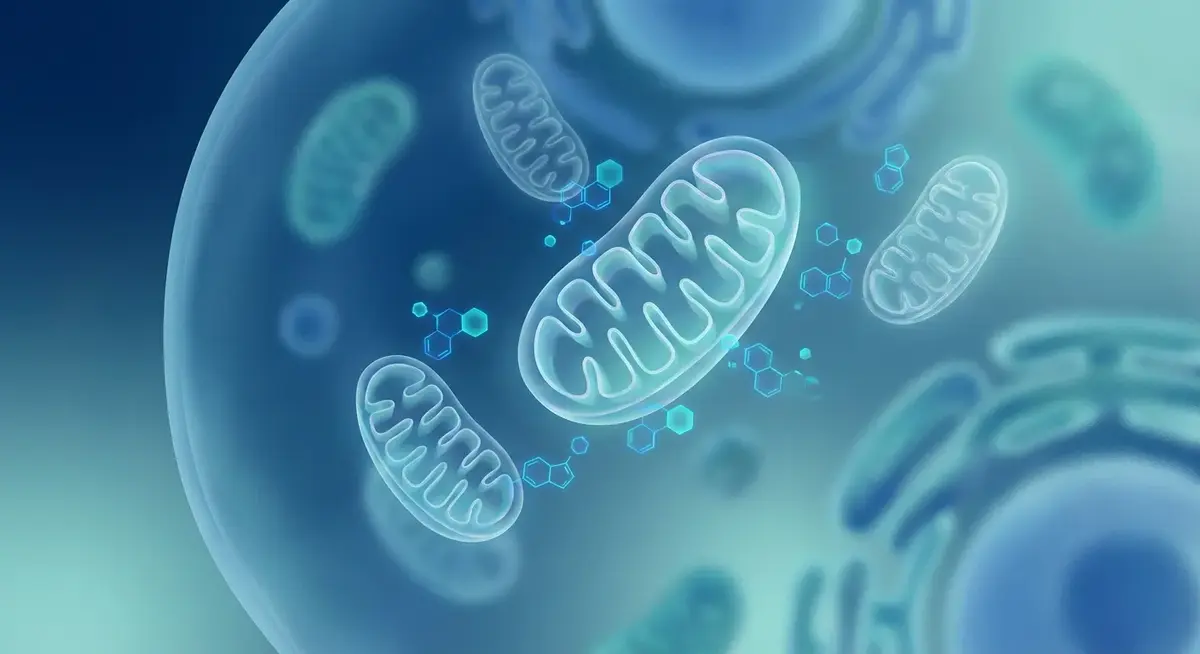
Your body depends on a molecule called NAD+ (nicotinamide adenine dinucleotide) for hundreds of cellular processes: producing energy, repairing DNA, keeping your immune system functioning, running your mitochondria. It’s not optional. Your cells need it.
The catch is that NAD+ levels drop as you age. By your 40s and 50s, you may have roughly half the NAD+ you had at 20. That decline tracks with the things people start noticing around that age: persistent fatigue, slower metabolism, brain fog, longer recovery after workouts, and a harder time keeping weight off.
NMN is one way to address that decline directly.
So what is NMN, exactly?
NMN (nicotinamide mononucleotide) is a molecule your body already makes in small amounts from B vitamins. It’s a direct precursor to NAD+, meaning your cells take NMN and convert it into NAD+.
The simplest way to think about it: NMN is raw material. Supplement with it, and you’re giving your cells more of what they need to produce NAD+.
Your gut absorbs NMN quickly. Researchers have identified a transporter protein called Slc12a8 that moves it directly into cells for conversion.
What the clinical research actually says
NAD+ levels go up
A randomized, double-blind, multicenter trial published in GeroScience found NMN raised blood NAD+ levels at both 30 and 60 days versus placebo. The 600 mg and 900 mg daily doses showed the strongest effect. No safety issues were reported.
Physical performance improves
Amateur runners taking NMN showed better oxygen utilization during exercise. A separate trial found older adults had improved physical performance with consistent supplementation. This makes sense mechanistically: more NAD+ means better mitochondrial energy production, which means less fatigue.
Insulin sensitivity gets better
A study on prediabetic women found NMN improved insulin sensitivity. A meta-analysis of randomized controlled trials also found positive effects on glucose and lipid metabolism, though the authors noted they want to see larger studies confirm the results.
If you’re dealing with blood sugar swings or stubborn weight, that’s worth knowing.
DNA repair mechanisms activate
NAD+ activates sirtuins, a group of proteins that handle DNA repair, inflammation, and stress response. When NAD+ drops, those repair systems slow down. Animal studies have shown NMN can reverse age-related DNA damage and lower oxidative stress markers. We’re still waiting on large-scale human trials for this specifically, but the biology is well mapped.
There are hints for brain health too
NAD+ matters for neuronal function. Preclinical work shows NMN can improve cognition and slow age-related brain changes. The human data isn’t there yet, but NAD+ decline and neurodegeneration are clearly linked.
Why you’re hearing about NMN from people like Andrew Huberman
NMN got a mainstream boost when Stanford neuroscientist Andrew Huberman started discussing NAD+ precursors on the Huberman Lab podcast. Huberman has talked about taking NMN himself as part of his longevity protocol, alongside other supplements like resveratrol and alpha-lipoic acid. His take: the animal data on NAD+ restoration is strong, the human trials are catching up, and the safety profile makes it reasonable to supplement while we wait for larger studies.
Dr. David Sinclair at Harvard has been even more direct. His lab’s research on NAD+ and aging is a big part of why NMN went from obscure biochemistry to a supplement you can buy at the grocery store. Sinclair has published extensively on how NAD+ decline drives aging at the cellular level.

Is it safe?
Clinical trials have tested NMN at doses up to 1,200 mg daily without safety concerns. Most studies use 250 to 900 mg per day. Side effects have been minimal across the board.
If you’re on medication or managing a condition, check with your provider before adding it. You’ve heard that advice before, but with something that affects metabolic pathways this broadly, it actually matters.
Getting the most out of NMN
How you take NMN matters almost as much as whether you take it.
Liposomal formulations absorb better than standard powder capsules. One study found liposomal NMN produced an 84% increase in blood NAD+ levels after four weeks, beating both standard NMN and placebo. The lipid coating protects the molecule from breaking down in your stomach.
On dosing, most research lands between 250 and 900 mg daily. Starting at 250-500 mg for the first month and seeing how you feel is reasonable.
You also need to stick with it. Studies show NAD+ levels decline again once you stop supplementing. This isn’t a one-month experiment.
And buy from companies that do third-party testing under cGMP standards. When you’re supplementing with a specific molecule at specific doses, purity is non-negotiable.
The NMN I recommend
I recommend Renue By Science Liposomal NMN. Their liposomal delivery has clinical data behind it showing higher NAD+ elevation than standard formulations. The product goes through four rounds of testing in ISO-certified and cGMP-certified labs, and it’s made in the USA.
The liposomal delivery is the real differentiator. More NMN reaches your cells instead of getting broken down during digestion. Most users notice energy changes within 2-3 weeks, which lines up with the clinical timeline for NAD+ elevation.

Shop Renue By Science NMN here
Where this stands
NMN isn’t magic. But the clinical data is real, the mechanism is understood, and the safety profile is clean. If you’re past 35 and feeling the drag of declining NAD+ (less energy, slower recovery, brain fog, weight that won’t budge), NMN is one of the few supplements where the research actually supports the claims.
You may also enjoy reading: The functional lab tests your doctor won’t order (but should).
This post contains affiliate links. Health Partner Coaching may earn a commission on purchases made through these links at no additional cost to you.
 Unlock Your Path to Vibrant Health: A Holistic Guide for Health and Longevity