
Perimenopause weight gain: why your metabolism actually changes (and what works)
“You’re eating the same. Exercising the same. Yet the scale keeps climbing. This is what’s actually happening inside your body, and why everything you’ve tried so far was never going to work.”
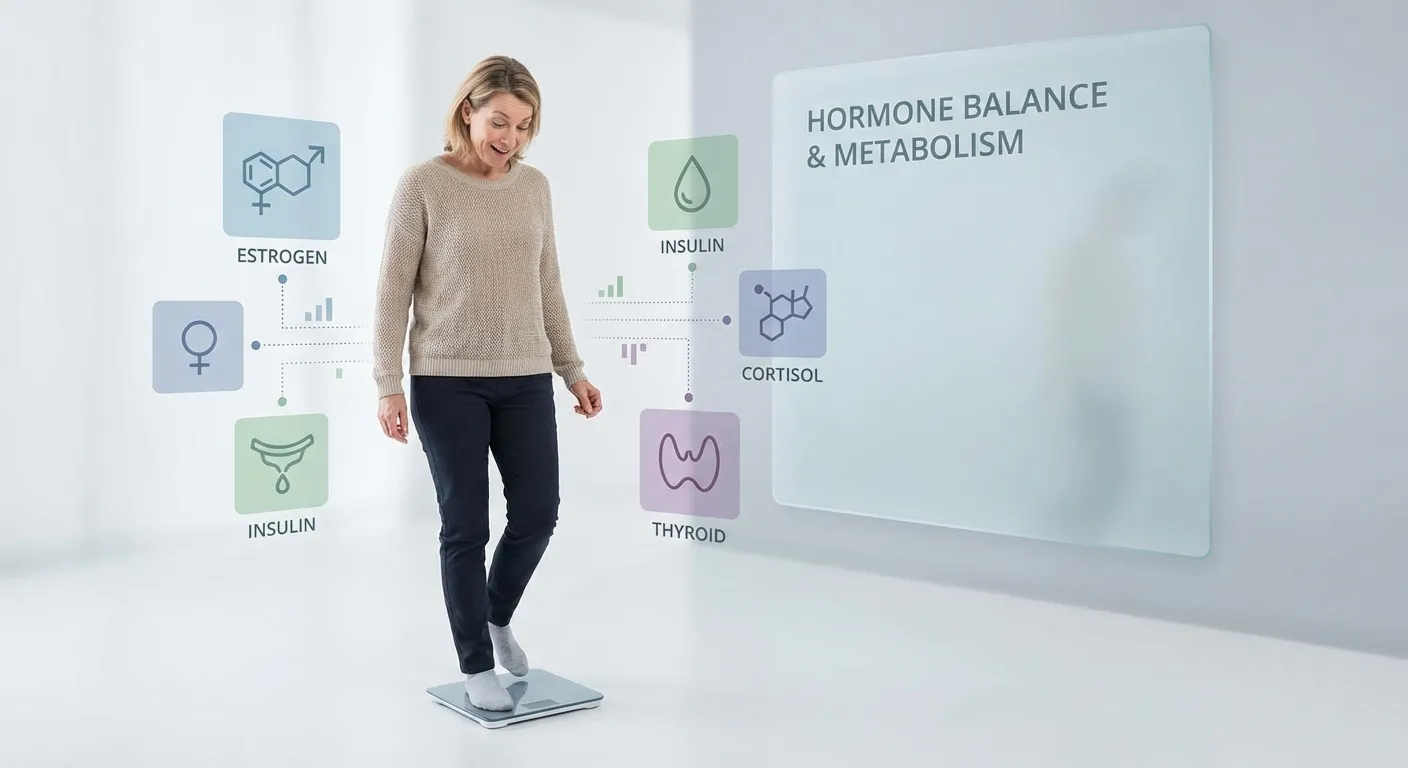
Could it be perimenopause weight gain? You’re not imagining it. The weight is harder to lose now. And it’s not because you’re eating too much or exercising too little.
Something fundamental shifted in your body, probably starting in your late 30s or early 40s, and nobody told you it was happening. Not your doctor. Not your trainer. Not the diet industry that keeps selling you the same advice that worked when you were 28.
As a registered pharmacist and certified health coach in Dripping Springs, TX, I work with women in this exact situation every week. And the first thing I tell every one of them is: this isn’t your fault. But it does require a completely different approach.
What’s actually happening to your hormones
Perimenopause goes beyond estrogen dropping. It’s a cascade of hormonal changes that rewires how your body processes food, stores fat, and burns energy.
The insulin problem
Estrogen normally helps your cells respond to insulin. As estrogen declines during perimenopause, you become increasingly insulin resistant. Your body needs more and more insulin to manage blood sugar. High circulating insulin is a direct signal to store fat, especially around your midsection.
A 2025 study from ZOE (the largest menopause metabolism study to date, with over 1,000 participants) confirmed that post-menopausal women show higher blood sugar spikes, greater insulin insensitivity, and increased cardiovascular risk markers compared to pre-menopausal women, even when eating the same foods.
That belly fat that appeared out of nowhere? It’s insulin resistance. Not calories.
The cortisol spiral
Declining estrogen combined with the life stress that typically peaks in your 40s and 50s (aging parents, career pressure, teenage kids, sleep disruption) keeps cortisol elevated.
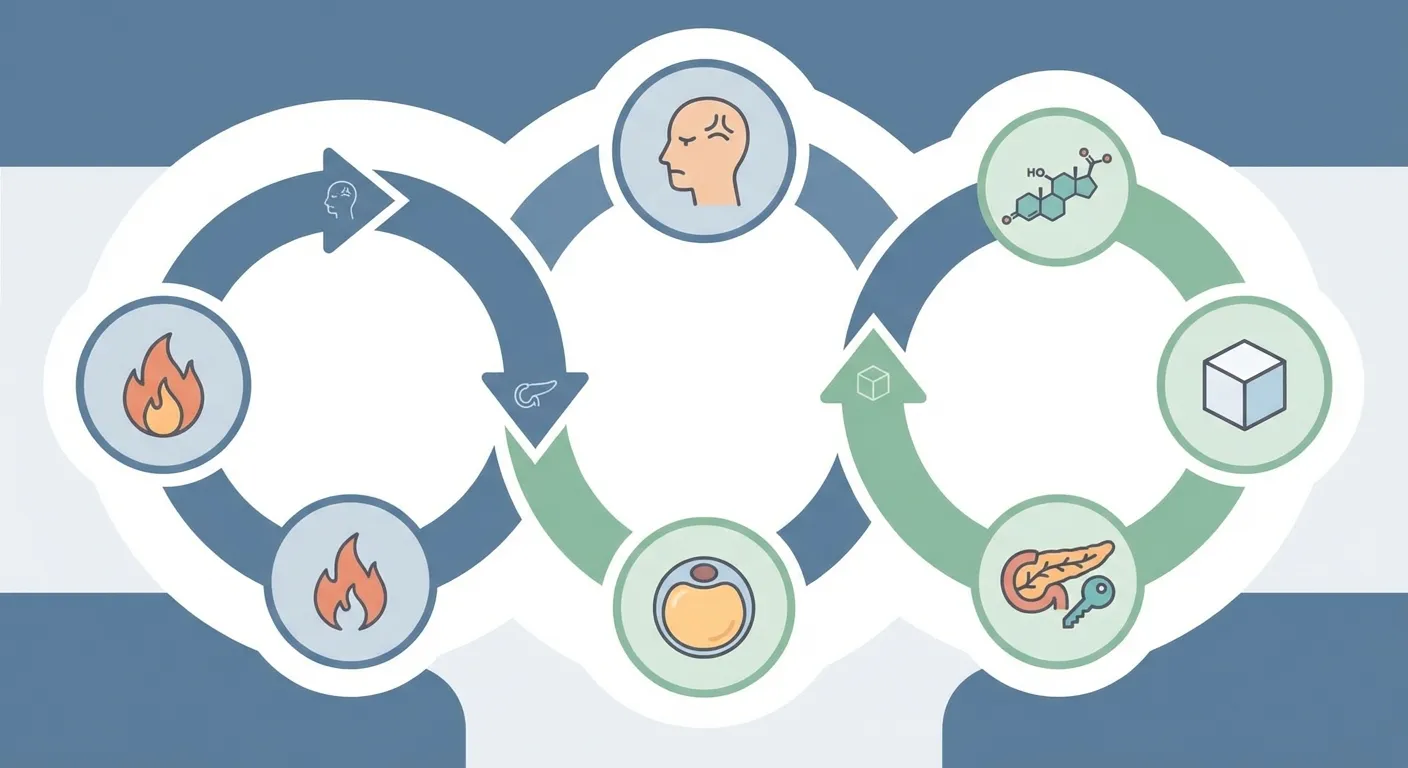
High cortisol tells your body to store fat in your abdomen (visceral fat) and break down muscle for energy. You lose the tissue that burns calories and gain the tissue that stores them. The weight redistribution is real. Hips and thighs shrink while your middle expands, and it’s cortisol driving it.
The thyroid slowdown
Your thyroid controls your metabolic rate, meaning how many calories you burn at rest. Estrogen decline disrupts the broader endocrine system, and thyroid function often takes a quiet hit.
The frustrating part: your TSH (the standard thyroid test) might come back “normal.” But “normal” is a wide range (0.5 to 4.5), and many women running at 3.5 or 4.0 are functionally hypothyroid. They have slow metabolism, fatigue, weight gain, brain fog, and hair thinning, but they keep being told “your labs are fine.”
Why everything you’ve tried has failed
Calorie restriction makes it worse
When you cut calories dramatically, your already-stressed body goes into survival mode. Metabolic rate drops. Cortisol spikes higher. Muscle breaks down faster. You lose weight initially, then plateau, then regain everything when you can’t sustain 1,200 calories anymore.
Your body isn’t broken. It’s protecting you from what it perceives as famine. The more aggressively you diet, the more aggressively it fights back.
Cardio is making things harder
Intense cardio (running, cycling, HIIT classes five days a week) raises cortisol further. When your body is already swimming in cortisol from hormonal changes and life stress, that extra cortisol makes insulin resistance worse.
The Menopause Society’s 2025 annual meeting previewed research showing that early menopause raises metabolic syndrome risk by 27%. That same research found that high-intensity exercise without adequate recovery can worsen metabolic markers in perimenopausal women rather than improve them.
What actually works after 40
1. Fix insulin first
- Aim for 25-30g protein at every meal. This stabilizes blood sugar and preserves muscle.
- Eat your carbohydrates in the second half of the day, when your body handles them better.
- Stop grazing. Every time you eat, insulin spikes. Three meals with minimal snacking gives insulin time to drop.
2. Manage cortisol like your life depends on it
- Get 7-8 hours of sleep minimum. Poor sleep raises cortisol and ghrelin (hunger hormone) at the same time.
- Stick with walking, strength training, and yoga for most sessions. Save the intense stuff for 2-3 times per week max.
- Address stress directly: meditation, boundaries, therapy, whatever works for you.
3. Build muscle. It’s your metabolism.
Strength training 2-4 times per week is the single most effective thing you can do for perimenopausal metabolism. Muscle is metabolically active tissue. It burns calories even at rest, and every pound of muscle you build raises your resting metabolic rate.
4. Get the right tests
Don’t accept “normal” bloodwork when you feel awful. Request:
– Fasting insulin (not just glucose)
– Full thyroid panel (TSH, Free T3, Free T4, TPO antibodies)
– Cortisol curve (morning, noon, evening, night)
– Estradiol, progesterone, testosterone, DHEA-S
These tests reveal why the weight won’t move and point to specific interventions.
5. Review your medications
My pharmacy background matters here. Many common medications (antidepressants, beta blockers, sleep aids, antihistamines) directly promote weight gain or block fat loss. If you’re fighting a medication side effect with willpower, willpower will lose every time.

You’re not broken, you’re in transition
Perimenopause is a metabolic transition. When you stop fighting your body with outdated advice and start working with your changing hormones, the weight responds.
I see this with women in the Dripping Springs and Austin area who were ready to give up after years of the same diet-and-cardio cycle. Once we identified the hormonal drivers and adjusted their plan accordingly, things started moving again. It’s a solvable problem, but it takes the right approach.
Ready to understand what’s really happening in your body? Schedule a free 30-minute clarity call. We’ll look at your hormones, medications, nutrition, and stress together, and build a plan that works for where your body is now.
— Irina Plakas, RPh
Certified Health Coach | Dripping Springs, TX
FAQ
When does perimenopause weight gain start?
Most women notice changes in their late 30s to early 40s, though it varies. The hormonal shifts that drive metabolic changes can begin 8-10 years before your last period. If the weight is suddenly harder to manage and nothing else has changed, perimenopause is likely a factor.
Is perimenopause weight gain permanent?
No. It’s a response to hormonal changes that can be addressed. When you rebalance insulin, manage cortisol, support thyroid function, and build muscle, your body responds. The approach won’t look like what worked at 25, but it works.
Should I take hormone replacement therapy (HRT) for perimenopause weight gain?
HRT can help. The 2025 ZOE study found it improved metabolic markers in many women. But it’s not a standalone solution. HRT works best when combined with the right nutrition, exercise, and stress management. Discuss with your doctor whether it’s appropriate for your health profile.
Why does the weight go to my stomach now?
Declining estrogen shifts fat storage from your hips and thighs (subcutaneous fat) to your abdomen (visceral fat). Insulin resistance and cortisol elevation drive this shift. It’s hormonal, and it’s addressable.
Can a pharmacist really help with perimenopause weight gain?
As a registered pharmacist, I can review your medications, identify which ones might be blocking your progress, interpret your lab results, and coordinate with your doctor on adjustments. Most health coaches can’t do that. The medication piece is often what’s been missing.
You may also enjoy reading: The functional lab tests your doctor won’t order (but should).
 Unlock Your Path to Vibrant Health: A Holistic Guide for Health and Longevity